
Fragments of the Atlantic Breeze
Portugal has become more than a destination, almost a second home.
Each trip reveals a different face of the Atlantic: fishermen setting up makeshift markets on the sand, surfers chasing the fading light, locals gathering as the day winds down.
The coast feels both fragile and enduring, shaped endlessly by the ocean, yet grounded in everyday life. Returning here again and again lets us see past the surface, closer to the rhythm of those who live with the sea as their constant backdrop.

Evening falls on the edge of the Atlantic. The day slows, but the sea never does.
The day’s last catch pulled ashore.
Still warm from the water, the fish glisten like pieces of the tide.
The market begins long before the crowd arrives. On the red tarps, the day’s catch is sorted — blue baskets against the orange glow. The air fills with the sound of scales, nets, and quiet talk. It’s work, but it feels more like repetition than labor — an old habit shaped by tide and time.

As the sun lowers, work becomes rhythm. Hands move fast, practiced: fish, baskets, light, and water blending into one steady motion.

The beach turns into a floor. Each step leaves a trace that will vanish with the tide.

The first sale happens quietly. No shouts, no rush. Just habit, precision, and salt-stained hands.
By now the market has taken shape. The crates form neat rows, the buckets fill and empty again. Locals arrive with bags and small scales, their gestures as practiced as the fishermen’s. There’s no separation between work and life here. Only the rhythm of exchange, carried by the breeze and the sound of the waves behind it.

The net returns to order. Between its threads, the day’s last light filters through.
The pace slows. Nets are folded, crates rinsed, sand brushed away. Through the mesh, you can see the day’s stories - hands, faces, movement - all stitched into the same fabric. Soon, the sound of the sea will drown out the rest, leaving only the hum of engines and the smell of salt on plastic
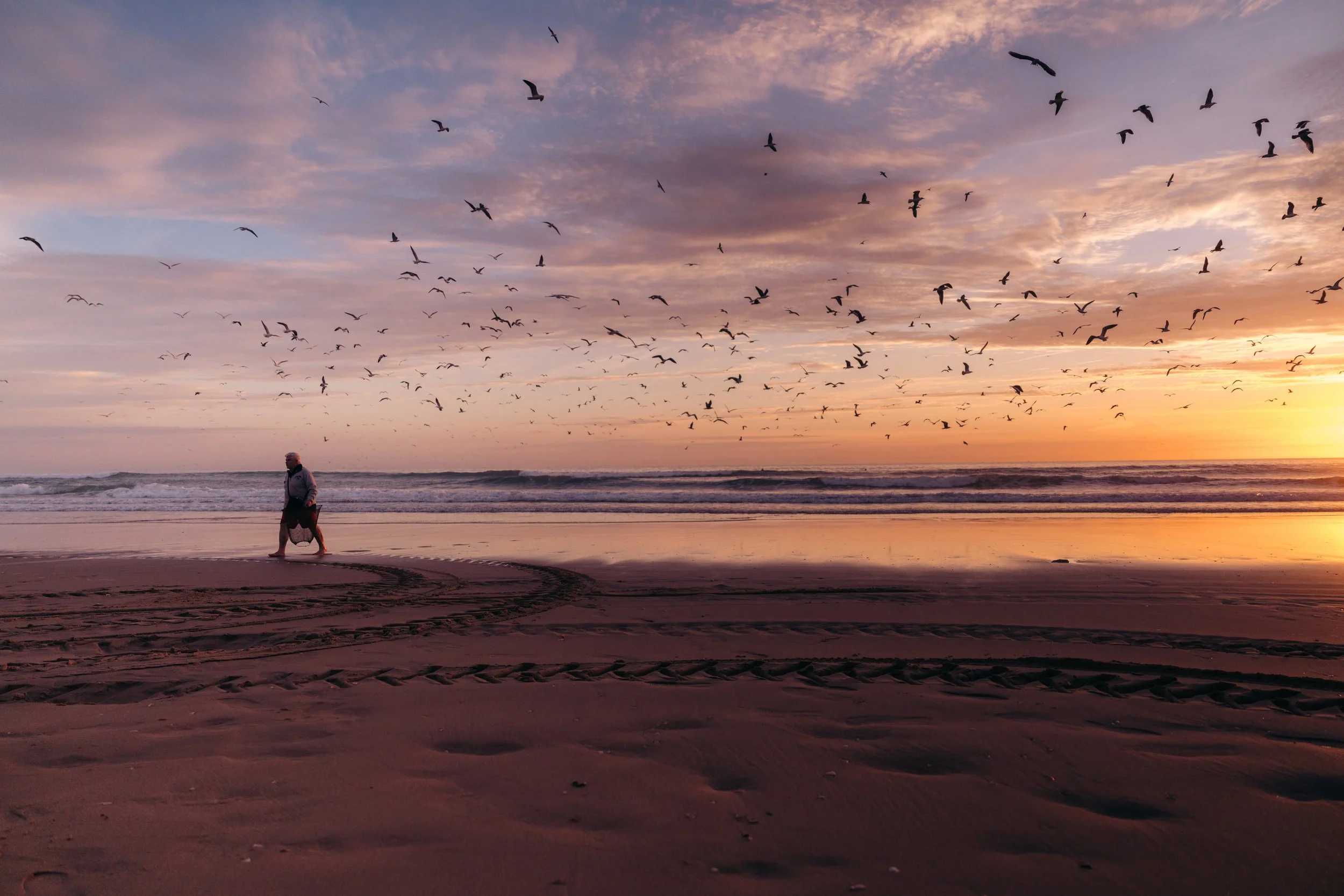
By the time the sky turns to copper, the voices fade. The beach is almost empty again, except for the birds that never leave.
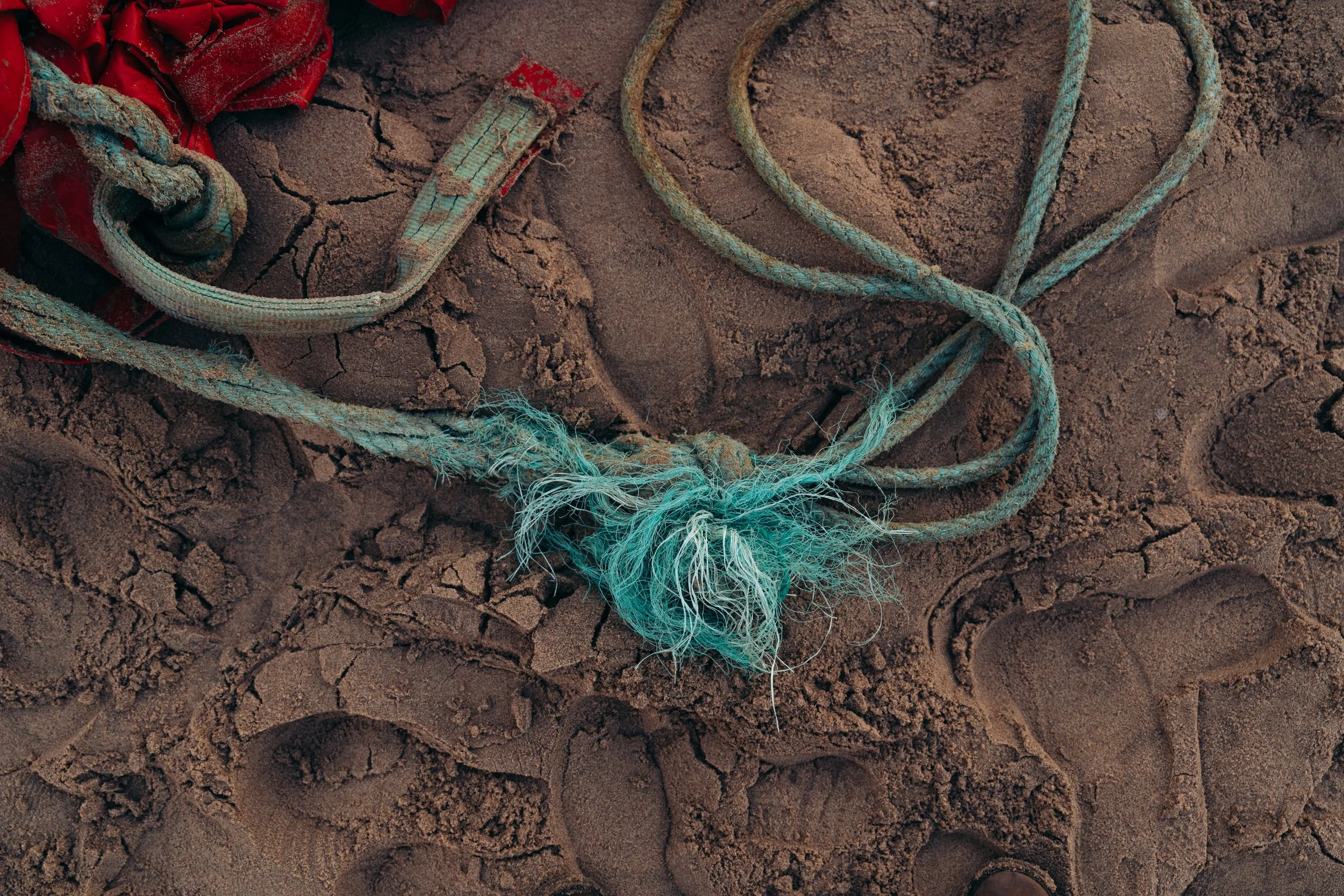
What’s left behind: rope, sand, and the marks of another day that will wash away by morning.

The sea breathes out. Work is done, and the day folds back into the tide.